

The shoulder girdle, often referred to as the pectoral girdle, plays an important role in the overall functionality and mobility of the upper body. This complex structure connects the arms to the torso and provides a wide range of movements for arm and shoulder function. To truly appreciate the shoulder girdle, it’s important to understand the muscles involved in its operation, their functions, and how they contribute to our daily activities.
Key Muscles of the Shoulder Girdle
The shoulder girdle is composed of several important muscles that facilitate movement and stability. Here are the primary muscles involved:
1. Trapezius
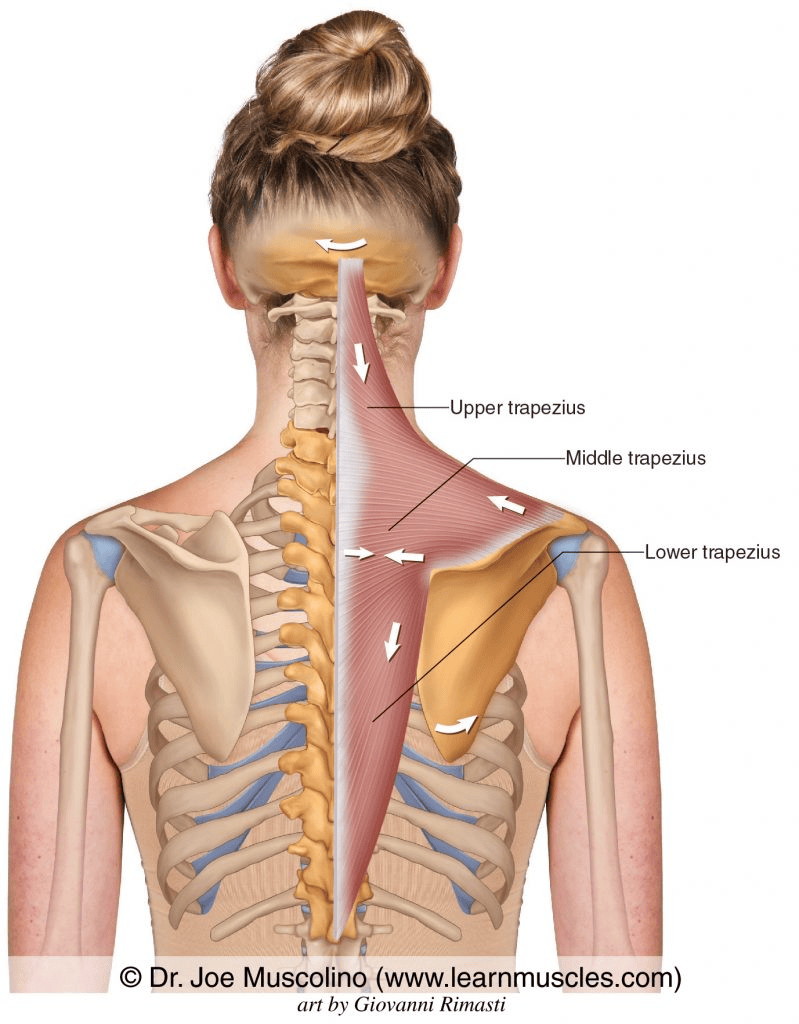
The trapezius is a large muscle that originates from the medial 1/3 of the superior nuchal line of the occiput, the external occipital protuberance, the nuchal ligament, and cervical and thoracic vertebrae of C7 to T12. It inserts onto the lateral 1/3 of the clavicle, the acromion process, the spine of the scapula and the tubercle at the root of the spine of the scapula. It is divided into three parts:
- Upper Trapezius: Originates from the 1/3 of the superior nuchal line of the occiput, the external occipital protuberance, the nuchal ligament, and the spinous process of C7. It then inserts onto the lateral 1/3 of the clavicle and the acromion process of the scapula. Bilaterally extends the head and neck, laterally flexes the head and neck to the same side, rotates the head to the opposite side and elevates the scapula, contributing to shoulder shrugging.
- Middle Trapezius: Originates at thoracic vertebrae of T1 to T5 and inserts onto the acromion process and spine of the scapula. Retracts the scapula, aiding in posture and shoulder stabilization.
- Lower Trapezius: Originates at T6 down to T12 and inserts onto the tubercle at the root of the spine of the scapula. Depresses the scapula and assists in the upward rotation of the shoulder blade.
2. Rhomboids
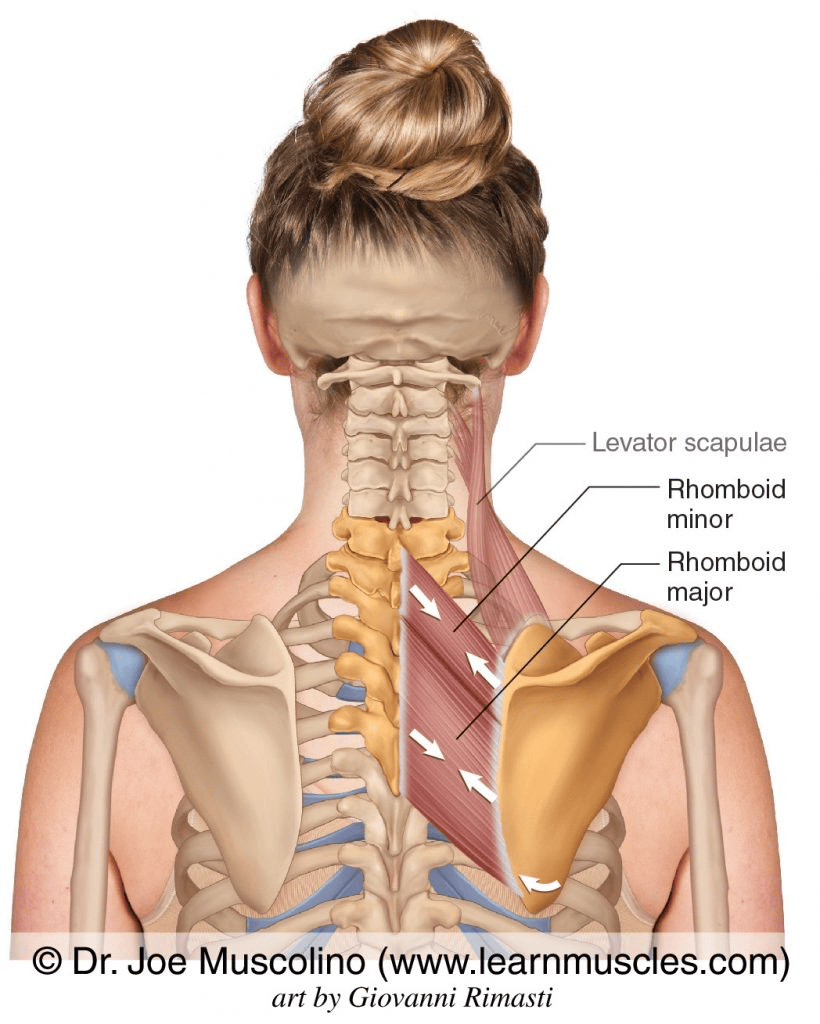
The rhomboid minor muscle originates from the cervical and thoracic vertebrae of C7 down to T 1, and inserts laterally and inferiorly onto the medial border of the scapula at the root of the spine of the scapula. The rhomboid major muscle originates from the thoracic vertebrae of T2 down to T5 and inserts laterally and inferiorly onto the medial border of the scapula, below the root of the spine of the scapula, and down to the inferior angle of the scapula. They play a key role in retracting the scapula, helping to pull the shoulder blades towards the spine, which is important for maintaining good posture and proper shoulder alignment.
3. Levator Scapulae
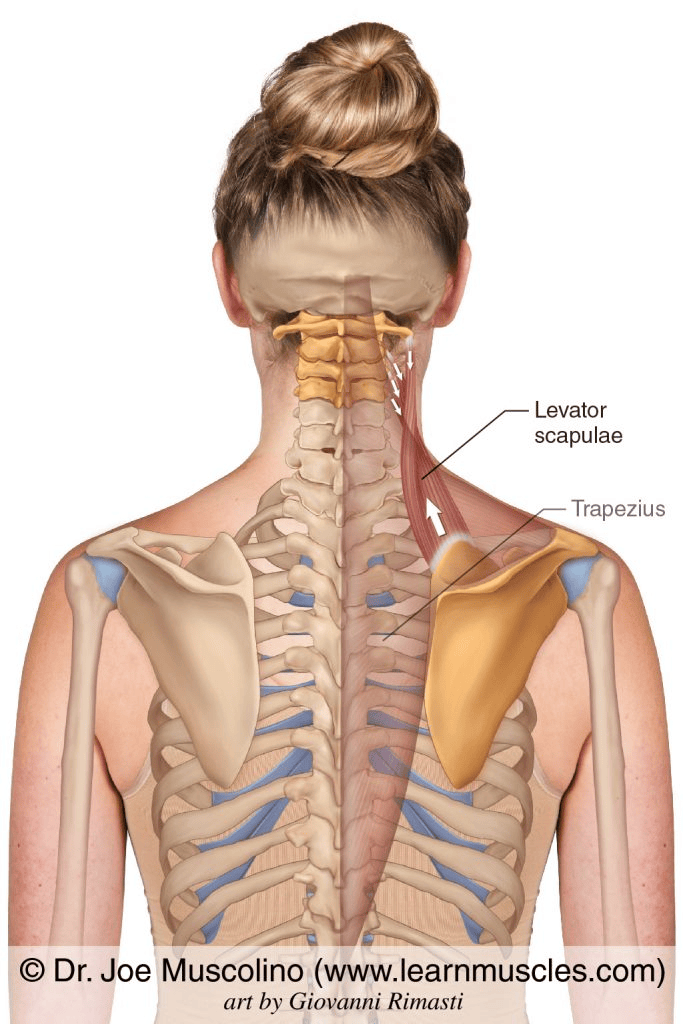
It originates from the axial skeleton of cervical vertebrae 1 through 4. It inserts onto the appendicular skeleton of the medial border of the superior angle of the scapula down to the spine of the scapula. As the name suggests, this muscle elevates the scapula, but it also laterally flexes and rotates the head and neck and bilaterally extends the head and neck.
4. Serratus Anterior
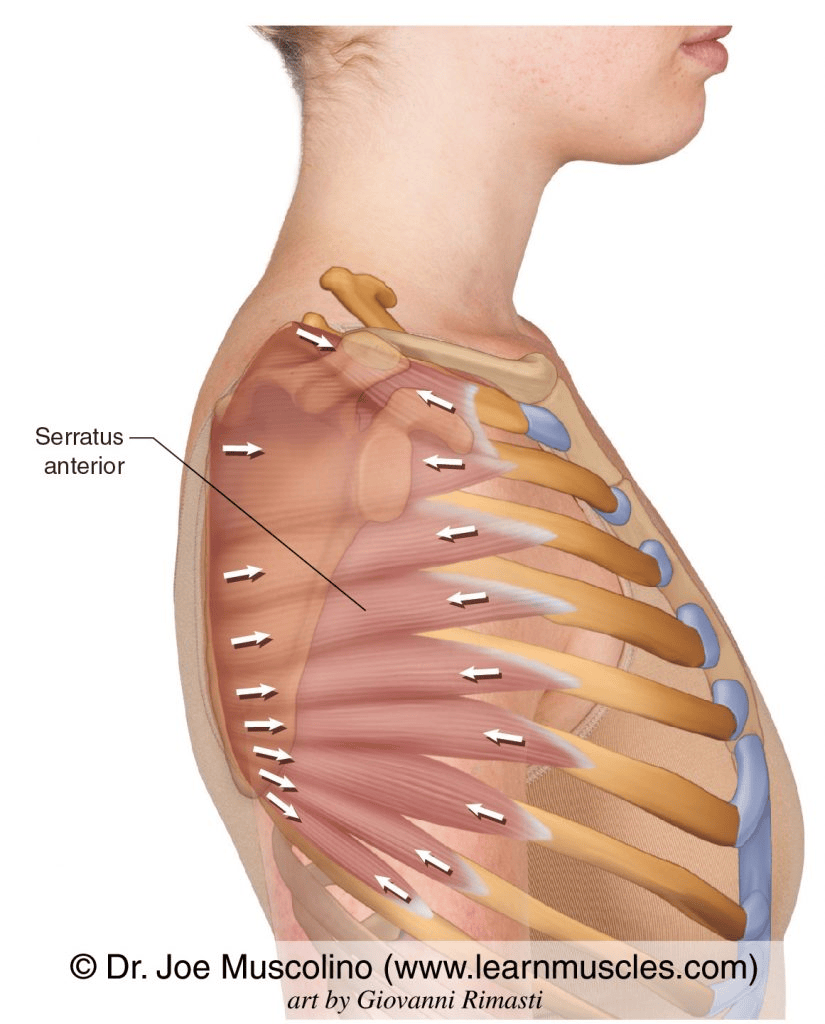
The muscle originates at the anterior-lateral surface of ribs 1 through 9 and inserts on the anterior surface of the medial border, from the superior angle, all the way down to the inferior angle of the scapula. This muscle at the scapulothoracic joint (between the scapula and rib cage) helps stabilize and protract the scapula during pushing and arm raising movements.
5. Pectoralis Minor
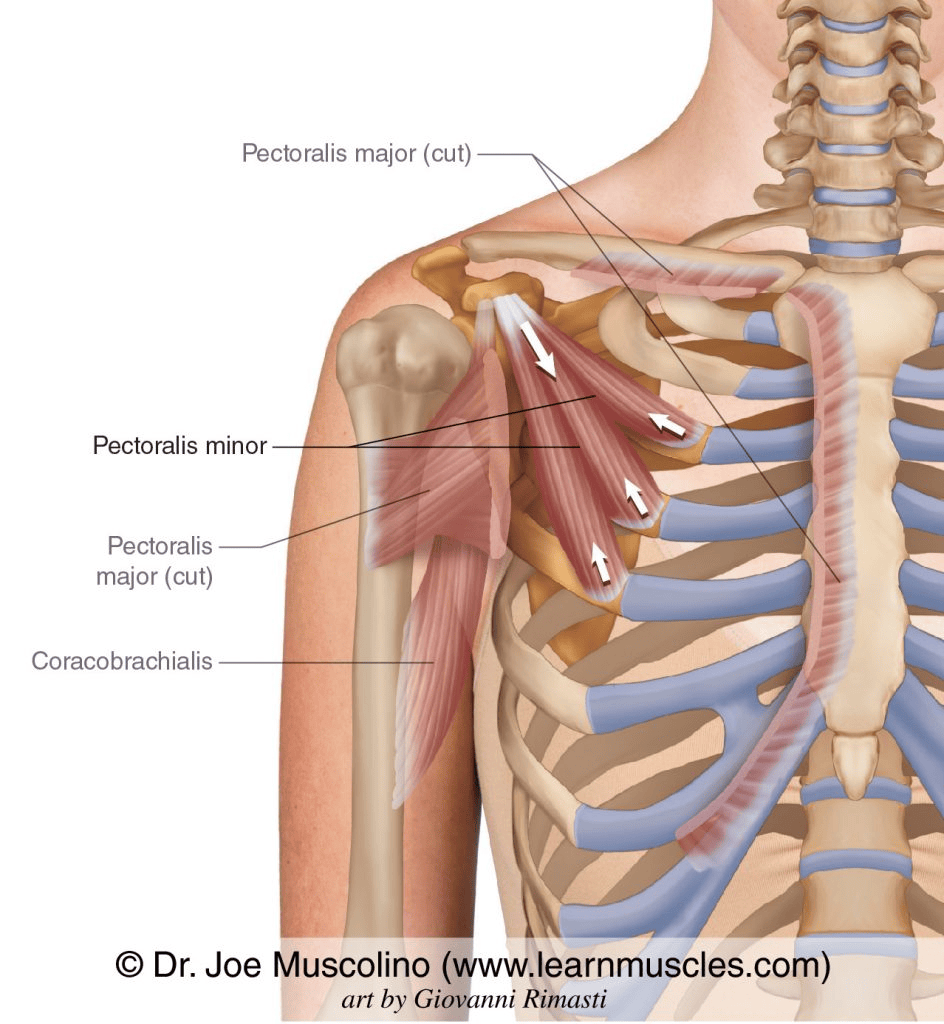
This muscle is located beneath the pectoralis major. The pec minor runs from ribs 3, 4 ,5 and attaches to the medial aspect of the coracoid process of the scapula. The pectoralis minor assists in the movement of the scapula forward and downward. It also plays a role in elevating the ribs, assisting in breathing during exertion.
6. Subclavius
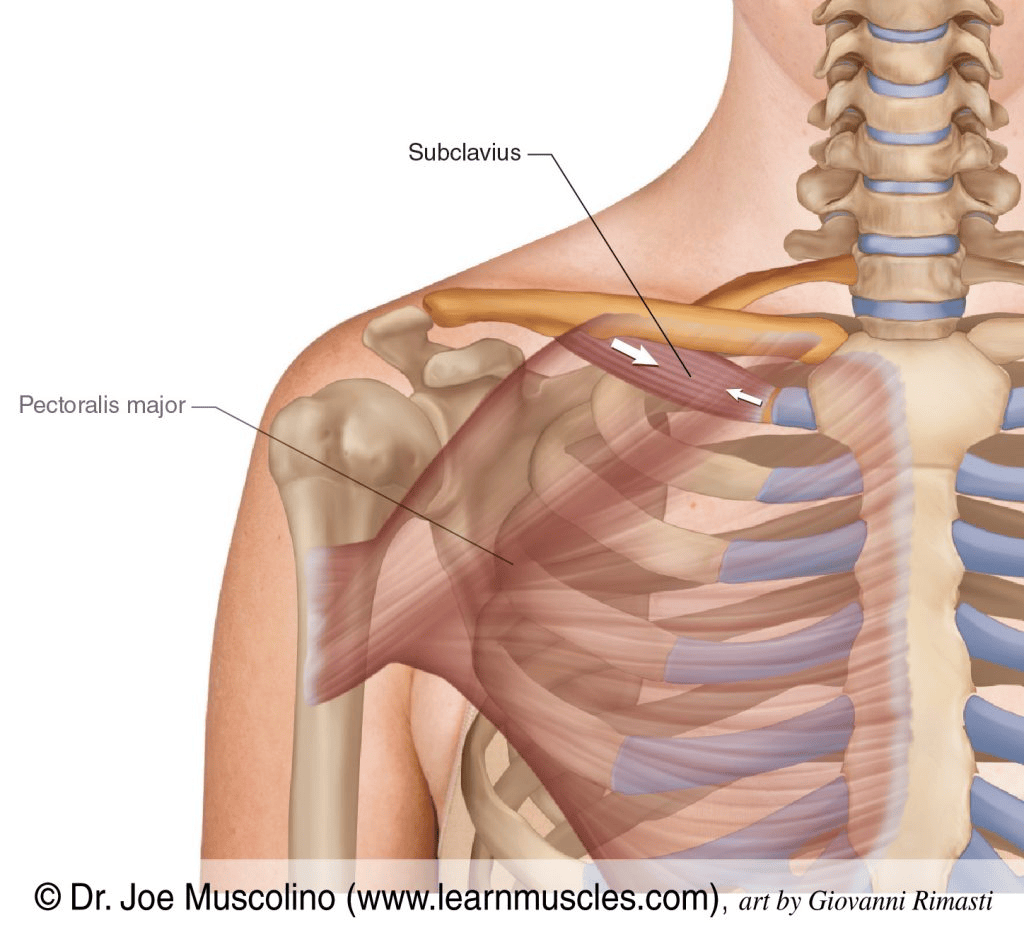
The subclavius is deep to the pectoralis major and runs from the costal cartilage of the first rib to the inferior middle 1/3 of the clavicle. The subclavius depresses the clavicle drawing it forward, elevates the first rib which assists in breathing, and stabilizes the sternoclavicular joint.
Functions of the Shoulder Girdle Muscles
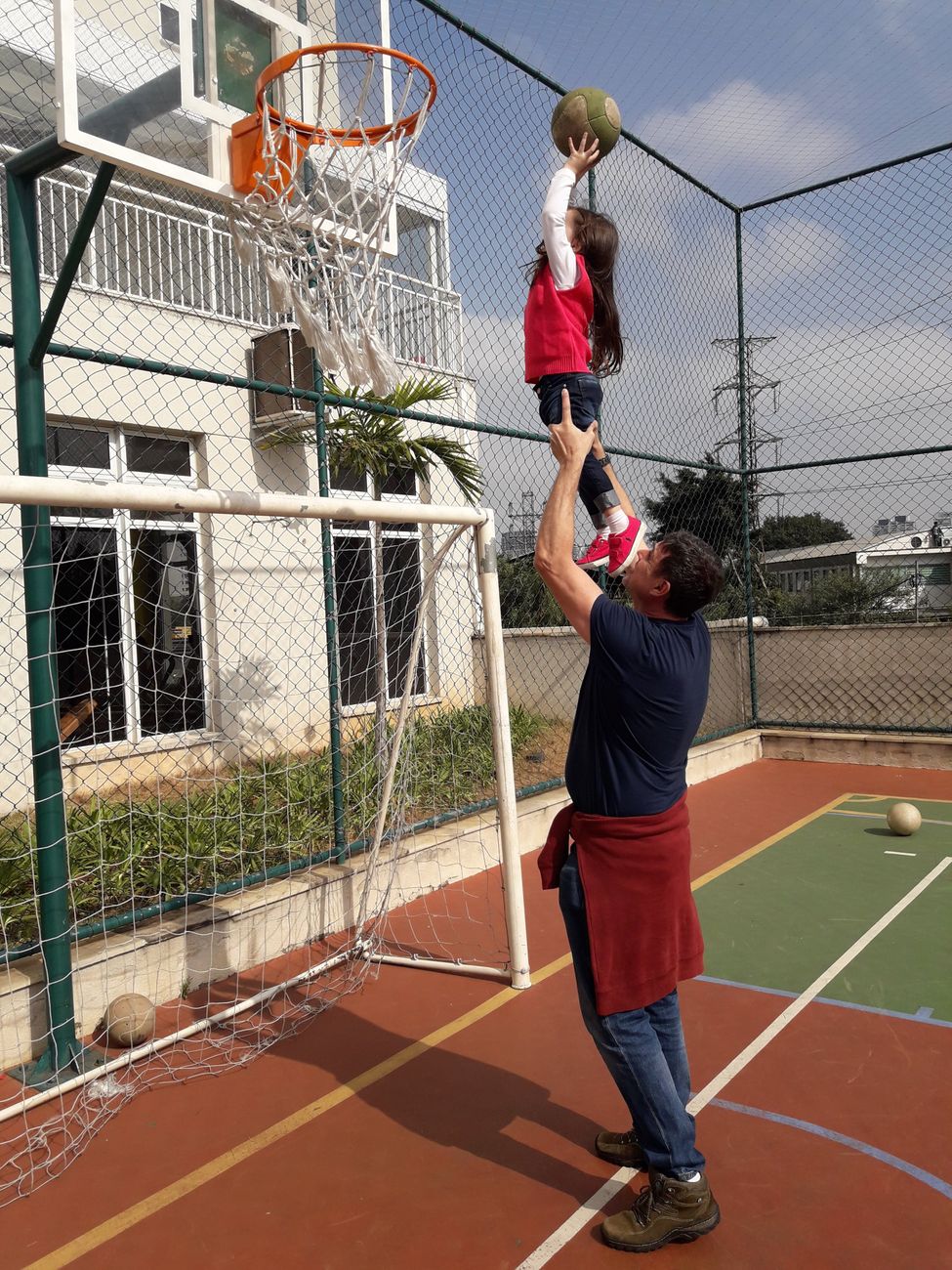
The shoulder girdle muscles work together to enable a wide range of functions, including:
- Flexibility: The shoulder girdle allows for movements in multiple planes, making it essential for activities such as throwing, lifting, and reaching.
- Stability: These muscles provide stability to the shoulder joint. This is important for maintaining proper form and preventing injuries during physical activities like pull ups, pushups and overhead press.
- Posture Maintenance: Strong shoulder girdle muscles support proper posture, reducing the risk of strain or discomfort in daily activities and sports. For example, desk work, cooking, washing dishes, vacuuming, or simply walking and running (breathing) need proper posture.

Strengthening and Flexibility Exercises
To maintain healthy shoulder girdle muscles, it’s important to engage in regular exercise that promotes strength and flexibility. Here are a few effective exercises:
Strengthening Exercises
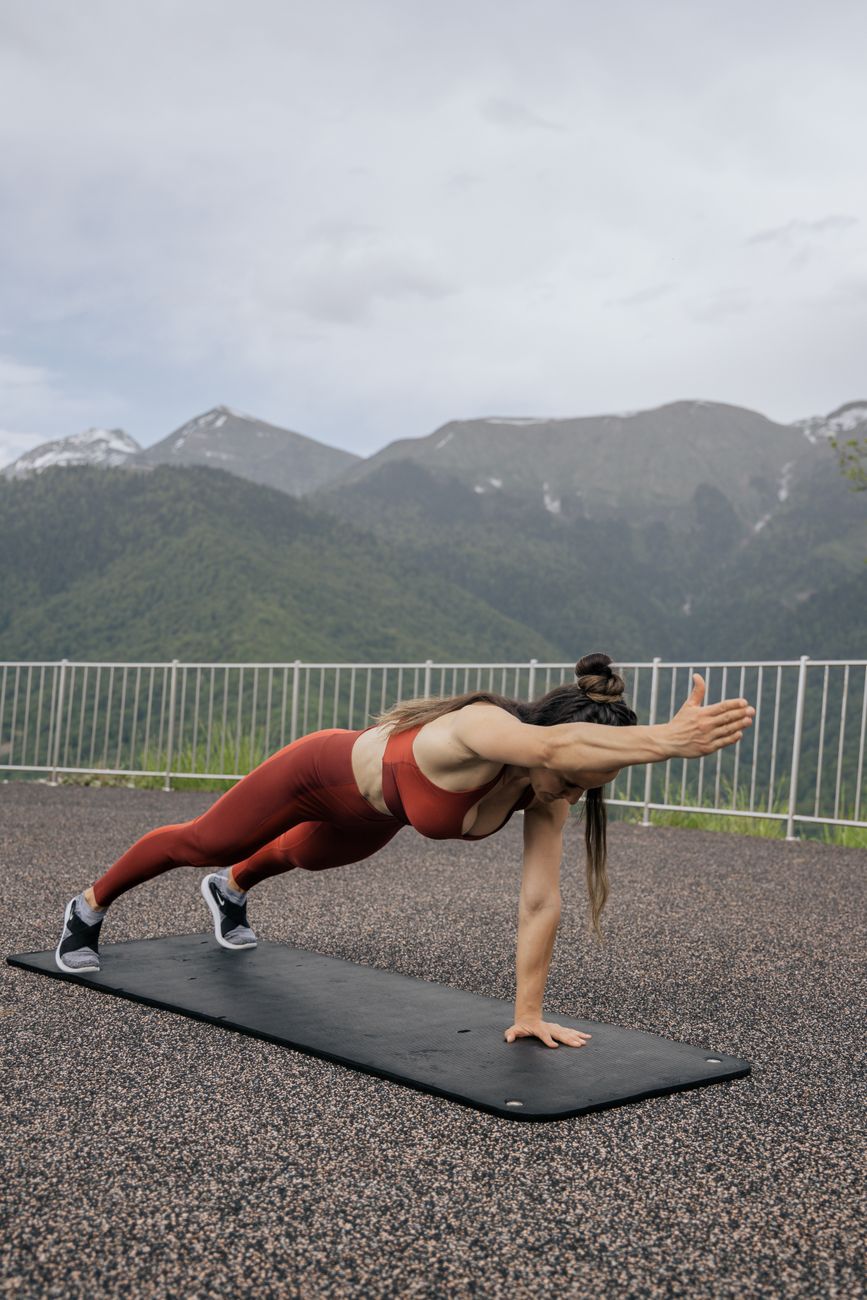
- Scapular Push-ups: Focus on shoulder stability while engaging the serratus anterior.
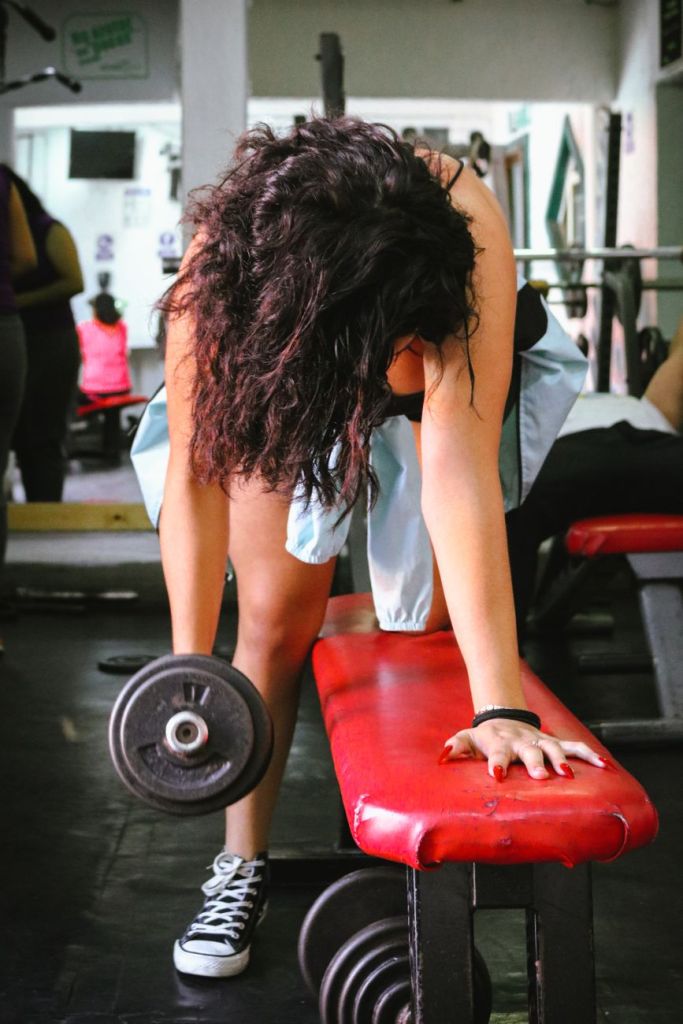
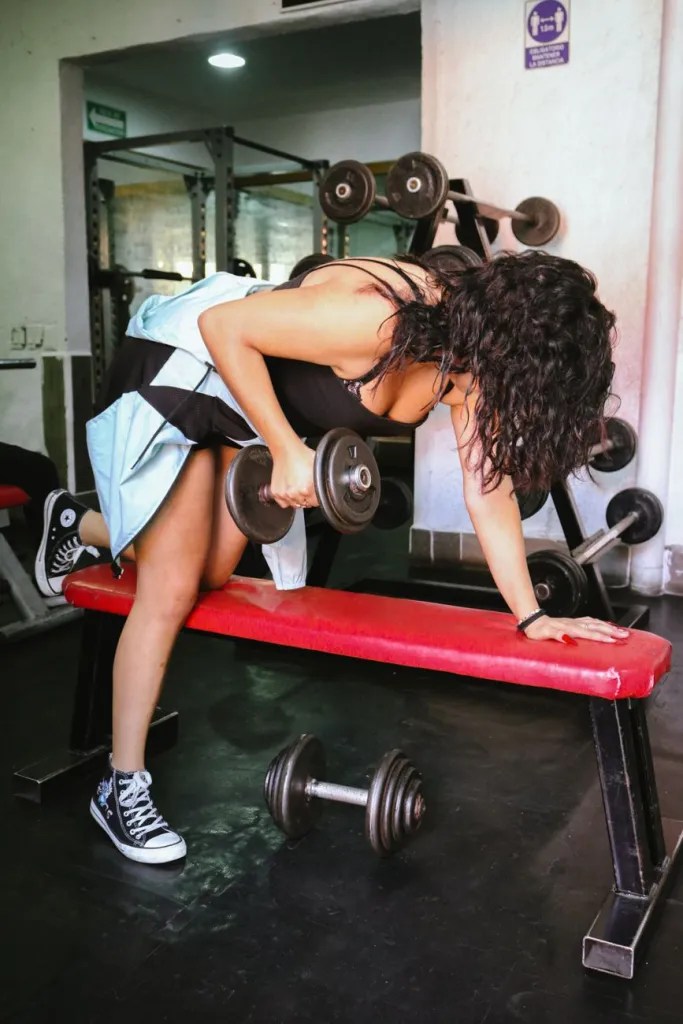
- Dumbbell Rows: Work the rhomboids and trapezius muscles by pulling weights towards your torso.
Flexibility Exercises
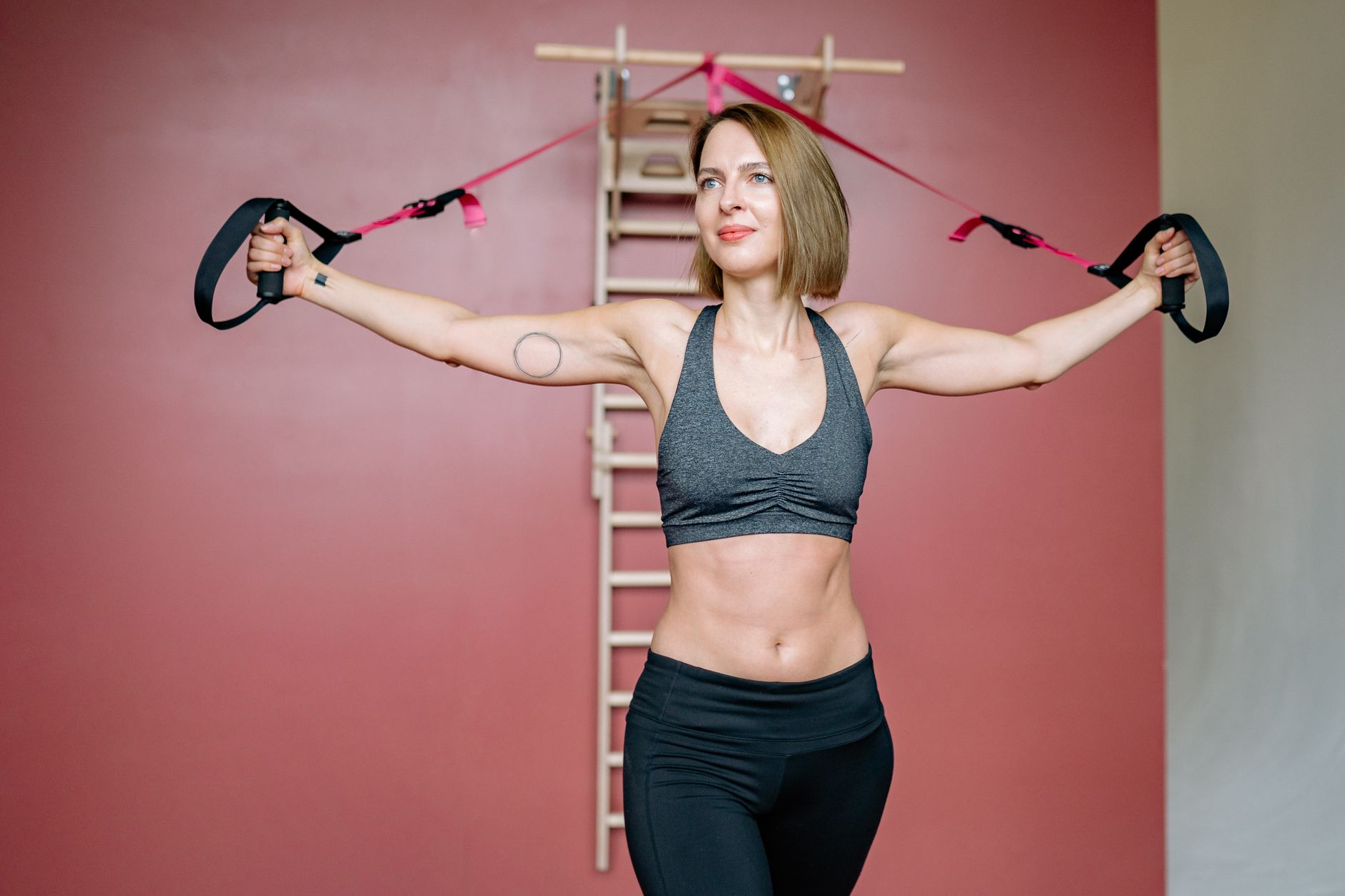
- Doorway Stretch: Stretch the pectoralis muscles by standing in a doorway or using a suspension trainer and leaning forward.
Conclusion
Understanding the shoulder girdle muscles and their functions is important for anyone looking to maintain shoulder health. Incorporating strength and flexibility exercises into your routine can help improve overall mobility, reduce the risk of injuries, and enhance performance in various physical activities like throwing, reaching, and lifting.
- 6 Month Program
- Bibliography
- Contact/Inquiry
- LEARN
- Privacy Policy
- Reviews
- Terms and Agreements
- Ramat
- Your Local Trainer a Living Room Away
- Thank You


