
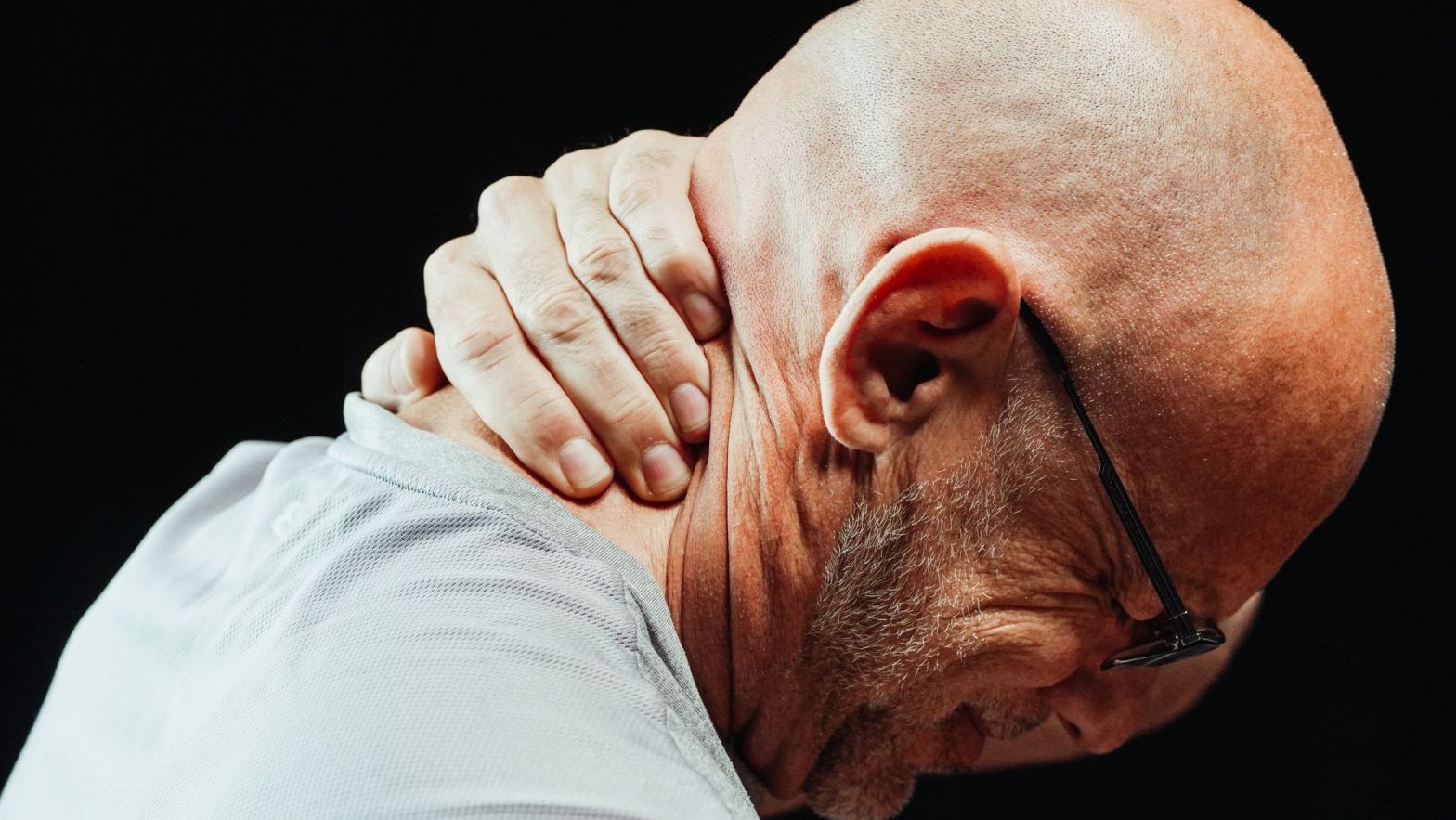
The levator scapulae are a pair of muscles located in the back of the neck. They originate from the transverse processes of the first four cervical vertebrae (C1-C4) and insert onto the superior angle and medial border of the scapula (shoulder blade).
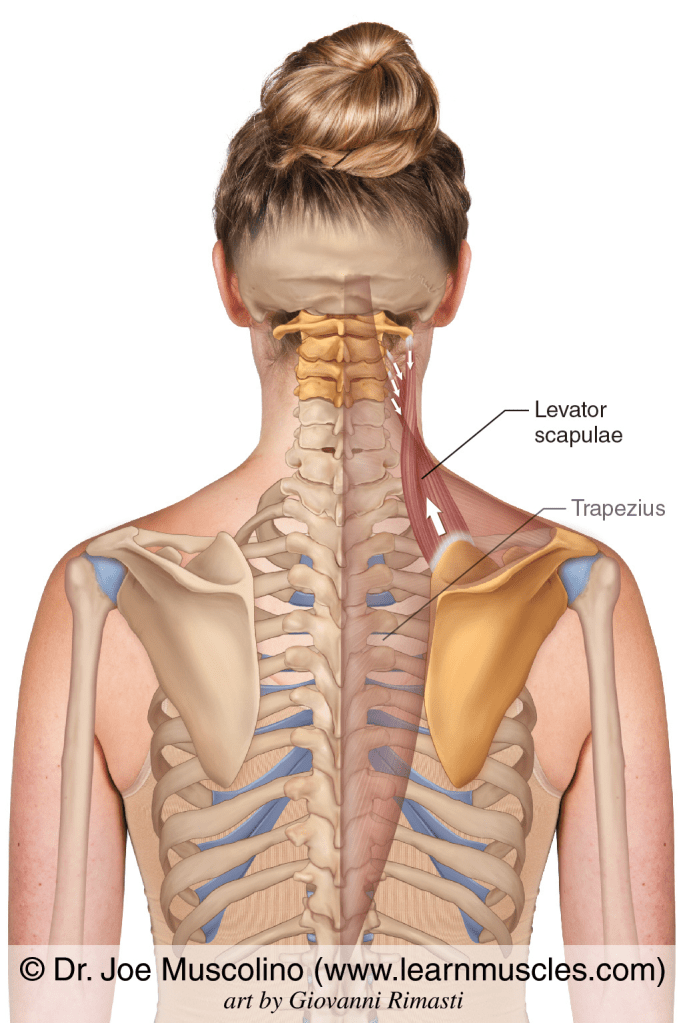
Functions of the Levator Scapulae:
- Elevation of the Scapula: They help lift the shoulder blade upward, contributing to shoulder shrugging.
- Lateral Flexion of Neck: It helps to tilt the right ear to the right shoulder.
- Lateral Rotation of Neck: A levator scapulae helps to rotate the head to the right or left.
- Downward Rotation of the Scapula: Pulls the superior angle of the scapula, causing the inferior angle to rotate downward, like bringing the arms down from an overhead position.

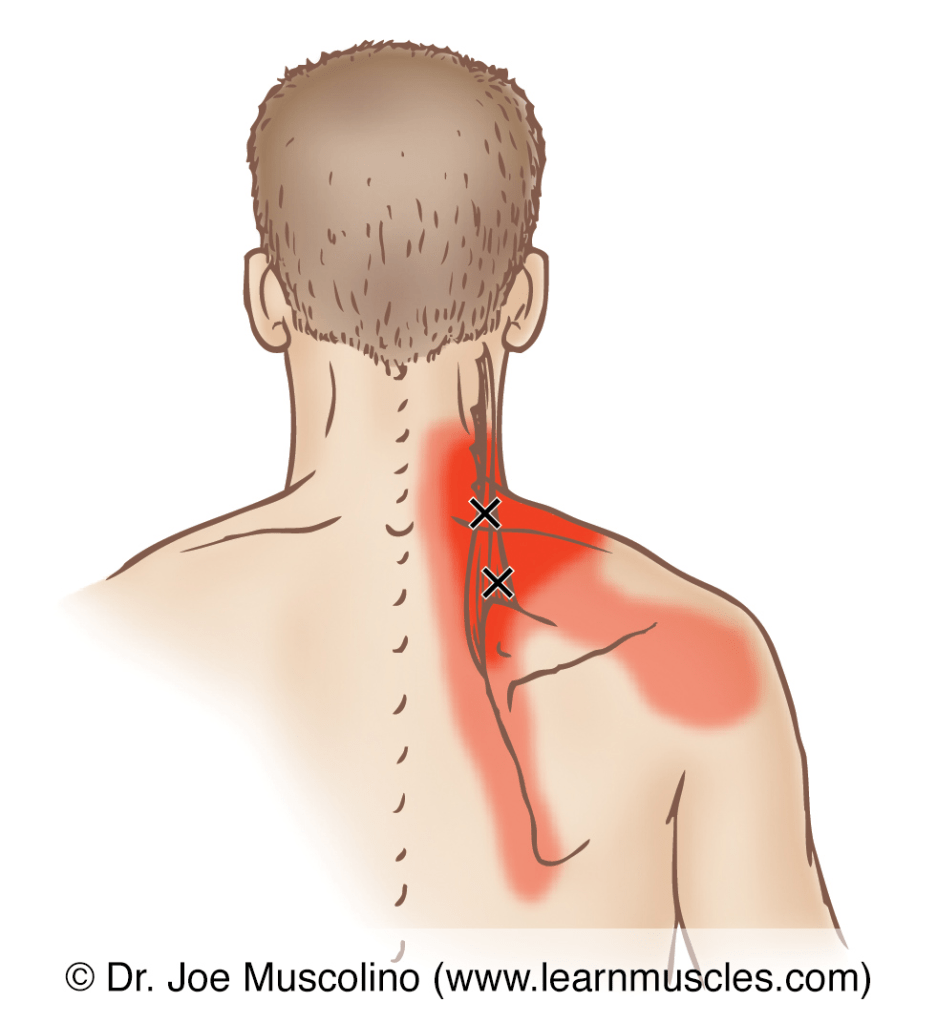
According to Travell and Simons, the levator scapulae muscle has specific trigger points that are associated with muscle tension and pain. Here’s an overview of these trigger points:
Levator Scapulae Trigger Points:
- Mid Trigger Point:
- Location: Found in the muscle belly of the levator scapulae, approximately midway along its length.
- Symptoms: Pain from this trigger point can radiate up to the base of the skull and down to the posterior deltoid. There might be increased tenderness upon palpation of the muscle.
- Lower Trigger Point:
- Location: Located near the attachment point at the superior angle of the scapula.
- Symptoms: This trigger point may refer pain to the upper back and down the medial border of scapula and can cause discomfort during overhead movements or when reaching backward.
Key Points:
- Referred Pain Patterns: It’s important to note that the pain caused by trigger points in the levator scapulae does not always localize to the immediate area; it can manifest in various regions, leading to confusion.
- Management: Treatment options include manual therapy, dry needling, stretching and strengthening exercises. Addressing these trigger points can significantly improve muscle function and alleviate pain.
Usual Suspects of Trigger Points
- Working with two screens at your desk with head turned
- Holding your cell phone with your shoulder or looking down at you phone
- Carrying a heavy bag on one shoulder
- Sleeping on your belly with head turned
- Stress, walking around with raise shoulders
- Improper use of crutch or cane
- Swimming mechanics
- Accidents, whip lash!
- 6 Month Program
- Bibliography
- Contact/Inquiry
- LEARN
- Privacy Policy
- Reviews
- Terms and Agreements
- Ramat
- Your Local Trainer a Living Room Away
- Thank You


