
The Ab Dolly push-up combines a push-up with a knee tuck using an ab dolly or similar roller platform. It challenges your chest, shoulders, triceps, abdominals, and hip flexors while requiring strong core control.
Equipment Needed
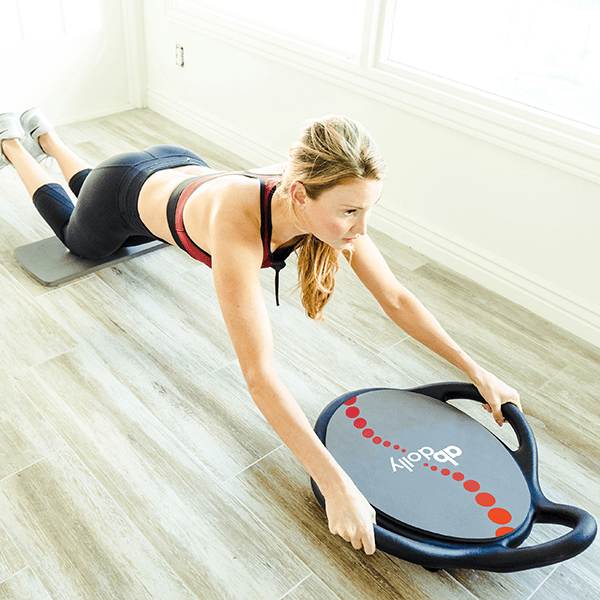
Courtesy of Home – Ab Dolly
- An ab dolly or stable exercise roller platform
- A smooth, non-slip workout surface
- Optional exercise mat for your hands
Check that the dolly rolls smoothly and is suitable for your body weight.
How to Perform the Exercise
1. Set Up the Dolly
Place the ab dolly on the floor behind where your knees will go. Make sure there is enough open space in front of and behind you to roll safely.
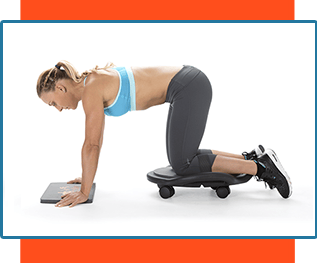
Courtesy of Home – Ab Dolly
2. Start in a Kneeling Plank
Place your hands on the floor slightly wider than shoulder-width apart. Position your knees on the ab dolly, with your hands under your shoulders.
Your body should form a plank on your knees.
3. Brace Your Core
Tighten your abdominal muscles and squeeze your glutes. Keep your hips level and your spine neutral.
Avoid allowing your lower back to sag.
4. Perform the Push-Up
Bend your elbows and lower your chest toward the floor. Keep your elbows at roughly a 30–45-degree angle from your torso.
Lower only as far as you can while maintaining a straight body position.
5. Press Back Up
Push firmly through your hands to straighten your arms and return to the kneeling plank position. Keep your shoulders stacked over your hands.
6. Perform the Knee Tuck
After completing the push-up, tuck your knees toward your chest by driving your knees forward on the dolly.
Keep your hips slightly elevated and contract your abdominals as your knees move inward.
7. Extend Your Legs
Slowly push the dolly backward until your legs return to the starting kneeling plank position. Keep your core engaged and avoid letting your lower back arch.
8. Repeat
Complete 2–4 sets of 10–15 repetitions. Rest for 20–30 seconds between sets.
One repetition consists of one push-up followed by one knee tuck.
Breathing Technique
- Inhale as you lower into the push-up.
- Exhale as you press up and draw your knees toward your chest.
- Inhale as you extend your knees back to the plank position.
Beginner Modifications
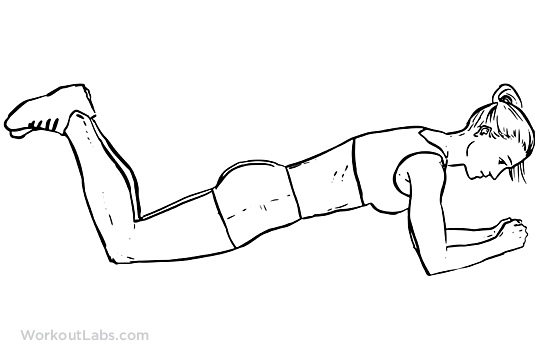
If the movement is too challenging:
- Perform the push-up with your knees on the floor.
- Practice knee tucks without the push-up.
- Limit how far you draw your knees forward.
- Keep the dolly stationary and practice holding a strong plank.
- Use an elevated surface for your hands, such as a sturdy bench.
Progressions
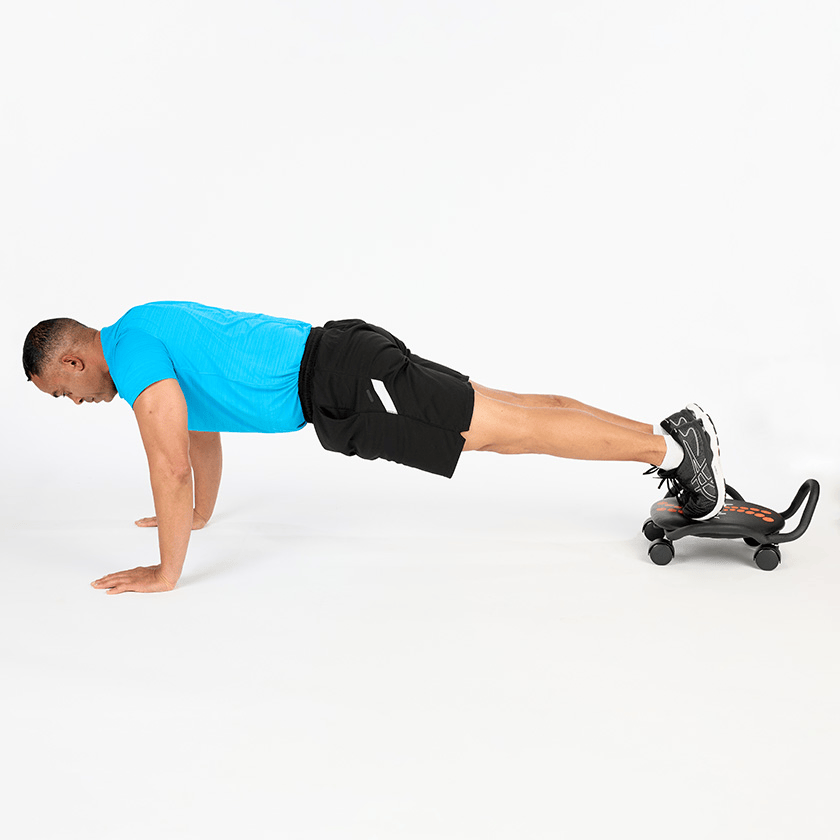
Courtesy of AB Dolly Plus – Ab Dolly
To make the exercise more difficult:
- Start the exercise on your feet in a high plank
- Perform a deeper push-up.
- Slow the knee-tuck and extension phases.
- Pause briefly with your knees tucked.
- Increase repetitions gradually.
- Add a second knee tuck after each push-up.
Common Mistakes to Avoid

- Sagging hips or low back: Brace your core, in other words, squeeze abs and squeeze your glutes.
- Raising the hips too high: Keep the tuck controlled rather than turning it into a pike.
- Using momentum: Roll the dolly smoothly.
- Flaring the elbows: Keep them angled slightly back from your body.
- Shortening the push-up: Lower with control and maintain a consistent range of motion.
- Losing control of the dolly: Use a slower pace, especially while extending your knees.
Safety Tips

Use the exercise only on a smooth, stable, non-slip surface. Make sure the dolly is in good condition and rolls predictably. Stop if you feel sharp pain in your wrists, shoulders, hips, or lower back. Build up gradually with planks, push-ups, and knee tucks before attempting the combined movement.
- 6 Month Program
- Bibliography
- Contact/Inquiry
- LEARN
- Privacy Policy
- Reviews
- Terms and Agreements
- Ramat
- Your Local Trainer a Living Room Away
- Thank You


